CSS3’s Color Property

I think it’s safe to say that almost every beginner developer knows that CSS’s color property is used to define the color of your HTML text elements. What many beginner developers might not know, however, is that the color property can […]

Read Article

When to Use CSS !important

Despite the fact that it’s widely used, applying CSS3’s !important declaration to your stylesheets isn’t considered to be a best practice. The !important declaration is typically used to override style rules that are defined elsewhere in the CSS. For example, […]

Read Article

CSS visibility: hidden vs. display: none

At first glance it might seem like CSS’s display: none rule and it’s visibility: hidden rule have the exact same function, but that’s not entirely accurate. While it’s true that both rules render an HTML tag invisible, they do so […]

Read Article

Styling Lists with CSS

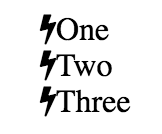
By default, each list item in any unordered list will be preceded by a standard round bullet point, like in the example below.

If round bullet points aren’t your style, CSS gives us a few different list-item marker options […]

Read Article

How to Center Any HTML Element

We’ve all had that pesky HTML element that refuses to center no matter how many different CSS styles we apply. We always get it eventually, but sometimes it’s not before a lot of time has been wasted trying to remember […]

Read Article

Quick Tip: Multiple Classes

Sometimes it’s necessary for an HTML element to have two, three, or even four + classes assigned to it. To assign multiple classes to an element, all you need to do is separate them with a space, like this:

< View […]

Read Article